When Pretty Woman arrived in theaters in 1990, it didn’t just succeed—it captured the collective imagination.
Audiences around the world fell for the unlikely romance between Vivian Ward and Edward Lewis, turning the film into one of the most beloved romantic stories of its generation.
Julia Roberts emerged as a luminous star, her warmth and charm impossible to ignore, while Richard Gere solidified his image as the polished yet conflicted leading man.
But what many fans don’t realize is that this glossy, hopeful love story nearly never existed in the form we know today. Its earliest version was darker, grittier, and far less forgiving, shaped by a worldview that focused on class divides and emotional cost rather than transformation and hope.
The original screenplay, titled 3,000, was written as a stark drama about exploitation and inequality. In that version, Vivian’s story did not end with romance or rescue, but with separation and realism. The turning point came when Disney became involved, steering the project toward something lighter, warmer, and more aspirational.
The shift transformed the narrative into a modern fairy tale, one that allowed audiences to believe in personal reinvention and emotional growth. Even so, traces of the film’s rougher origins remain, showing up not in tone, but in tiny continuity errors that fans have delighted in pointing out for decades.
A breakfast pastry mysteriously changes shape mid-scene, Edward’s tie appears and disappears, and small props seem to defy logic. Rather than hurting the film, these imperfections humanize it, reminding viewers that even cinematic magic is assembled piece by piece.
Some of Pretty Woman’s most unforgettable moments weren’t carefully scripted at all. Julia Roberts’ spontaneous laugh during the famous jewelry box scene became one of the most quoted moments in romantic film history, precisely because it was real.
Richard Gere’s relaxed piano playing in the hotel lobby wasn’t planned either, yet it added depth to Edward’s character, revealing vulnerability beneath his controlled exterior. Costume design also played a crucial storytelling role.
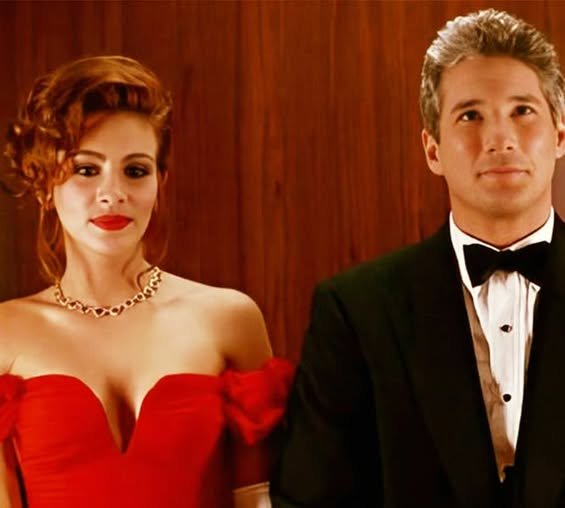
Vivian’s bold red opera gown symbolized her growing confidence and sense of self, while Edward’s immaculate suits reinforced the emotional distance he maintained from the world around him. Every visual detail quietly supported the characters’ emotional journeys, making their transformations feel earned rather than forced.
What ultimately allows Pretty Woman to endure isn’t its perfection, but its heart. The undeniable chemistry between Roberts and Gere grounds the fantasy in something genuine and relatable.
Their connection carries the story past its unlikely premise and into emotional truth. Beneath the designer clothes and lavish settings lies a message about dignity, empathy, and the courage to change.
Decades later, audiences still return to the film not because it’s flawless, but because it’s sincere. Its rough edges, rewritten beginnings, and small mistakes are exactly what make it feel alive—proof that sometimes the most lasting fairy tales are the ones that almost never happened.