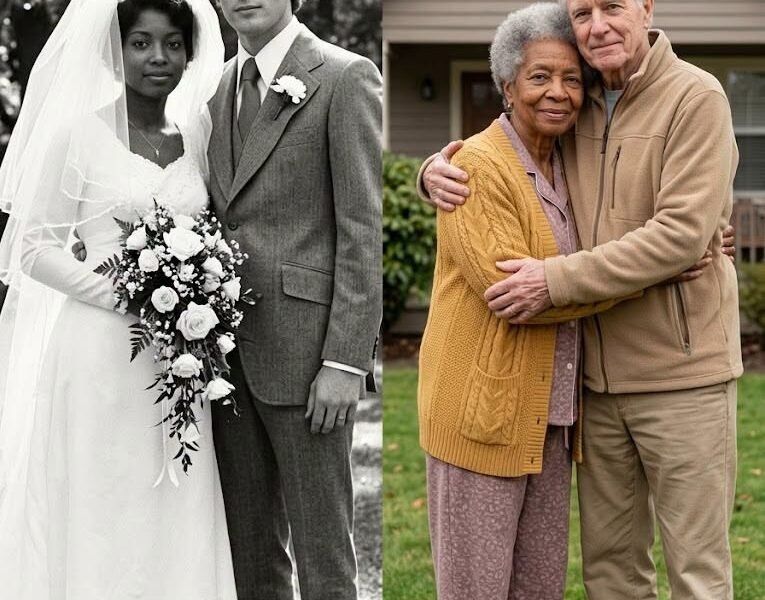
He asked her to “prove loyalty” by donating a kidney to his mother. She said yes… and woke up to divorce papers and a new woman at her bedside. | HO
He came back the next day asking for a scarf we didn’t even have in stock. Then again “just to browse.” Then again to stand near the counter while I organized a new collection, like my presence was the thing he was purchasing.
A month later, he invited me to dinner at a restaurant I’d only seen in magazines. I sat across from him with a menu that didn’t list prices, pretending I understood half the words, pretending I belonged there.
“Are you truly all alone?” he asked, covering my hand with his.
“No family,” I said, and even now I can hear how small my voice sounded. “No one at all.”
His thumb moved once, slow, reassuring. “We can fix that,” he whispered.
That sentence became my addiction.
Six months later we were married in a quiet courthouse ceremony outside the city. Julian explained it as his mother’s preference—she didn’t believe in wasting money on a “show.”
I didn’t argue, though I had secretly dreamed of a white dress and photos I could hang on a wall, proof that something good had finally stayed.
The most important part was that I had a family. A home. A man who promised he’d be by my side forever.
Even if his mother, Beatrice Bain, looked at me with thinly veiled contempt and never missed a chance to remind me where I came from.
Even if their estate in Alpharetta made me feel like an uninvited guest in someone else’s museum. I learned to walk softly, to ask before opening the refrigerator, to make myself small in rooms designed to make people feel large.
For two years, I tried.
I cooked dinners from elaborate recipes Beatrice barely tasted before pushing her plate away like I’d insulted her with seasoning. I bought her gifts—perfume, jewelry, wraps—that disappeared into the depths of her closet and were never seen again. I smiled when she called me her “charity case” in front of guests, because I thought endurance was the same thing as love.
It wasn’t.
Beatrice got sick.
The diagnosis landed like a judge’s gavel: chronic kidney failure, dialysis three times a week at a private clinic, her heart weakening month by month. Doctors in expensive offices shook their heads with practiced sympathy. The donor waitlist could take years.
She didn’t have years.
She had months. Maybe weeks.
Julian started the conversation in a hospital corridor while his mother lay behind glass, tethered to a dialysis machine.
He dropped to his knees on the cold tile and took my hands like he was proposing all over again.
“I know what I’m asking,” he said, voice trembling. “I know it’s too much, but you’re the only one who can save her. You’re the only one in the world.”
I felt my stomach go hollow. “Julian…”
“I checked your records,” he rushed on. “Remember that physical six months ago? I asked the doctors to check for a match just in case. You’re a perfect match, Ammani. One in a thousand, and it’s you.”
Give a kidney. A piece of my body. A permanent before-and-after.
“What about you?” I asked, voice rough. “You’re her son. Why not you?”
He pulled a folded report from his jacket pocket. Stamps, signatures, a thick block of text that might as well have been a foreign language.
“Incompatible,” he said. “I was the first one tested. Do you think I would ask you if I could do it myself? Do you think I wouldn’t give her both if it were possible?”
I wanted to question it. I wanted to call the clinic. I wanted to ask to speak to a social worker, a counselor, anyone whose job it was to make sure this wasn’t happening the way it was happening.
But I believed him because I wanted to believe him.
My whole life had been built on the fragile hope that people were fundamentally good, and Julian knew exactly where to press.
For three days he didn’t let up. He gave me no time to think, no time to talk to anyone else. He brought me coffee in bed, stroked my hair, used that soft, careful tone that made me feel chosen.
“You’ll truly be part of the family now,” he whispered in the dark. “Not just a name on a marriage license. Blood and flesh. My mother will love you like her own daughter. I swear. And after the surgery, we’ll fly to Bora Bora. Just you and me, a whole month. You deserve the best, Ammani.”
I pictured Beatrice’s grateful smile. I pictured her hugging me without coldness for the first time. I pictured her saying, Thank you, daughter.
I had wanted to belong to someone for so long. Here was my chance to prove my worth with something no one could dismiss.
On the third day I heard myself say, “Fine. I’ll do it.”
Julian pulled me close, burying his face in my hair.
I didn’t see the triumph in his eyes, because I wasn’t looking for it.
Love is the easiest thing to counterfeit when you’re starving.
The day before surgery, I sat in the chief of medicine’s office signing what felt like a phone book worth of documents: informed consent, waivers, protocols, each with its own number and seal. My head pounded from lack of sleep. The lines blurred.
“One more,” Julian said, pointing to a clause. His tone had turned casual, almost bored. “Standard. It’s just a backup plan.”