The bookstore had always felt like a place where nothing harsh could reach me.
Light spilled through tall windows, dust drifting lazily in the air, and the scent of old paper wrapped everything in a quiet kind of comfort. It was the one job that never drained me. It gave me space to breathe.
Until the day a girl walked in and changed all of that.
She moved differently from the others. Hoodie pulled low, shoulders tight, a backpack hanging heavier than it should have. I noticed her immediately—not because she stood out, but because she was trying so hard not to.
She hovered in the paperback aisle, fingers brushing along the spines like she was searching for something specific. Not browsing. Not curious.
Searching.
And then I saw it.
A small, careful movement. A worn book slipped into her bag.
Not rushed. Not panicked.
Deliberate.
When I approached her, she didn’t run.
She froze.
And then everything in her seemed to collapse at once.
The tears came fast, like they had been waiting just beneath the surface. Her voice shook as she tried to explain, words tripping over each other.
The book… it had been her mother’s favorite.
Her mom had read it to her every night. Same story, same voice, same ending.
Until she got sick.
Until she didn’t come back.
She wasn’t stealing it to keep.
She just wanted to place that exact copy on her mother’s grave.
A goodbye she hadn’t known how to give.
Standing there, listening to her, store policy suddenly felt… small. Almost meaningless in the face of something so human.
So I didn’t argue.
I didn’t lecture.
I walked to the register, paid for the book myself, and brought it back to her.
When I handed it over, she looked at me like I had given her something far bigger than paper and ink.
She hugged me.
Tightly.
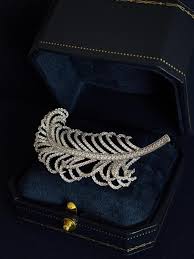
Then, before leaving, she pressed something into my hand—a small silver flower brooch with a blue stone at its center.
“It’s lucky,” she whispered. “My mom said it would save you.”
And then she was gone.
The next morning, my manager called me in.
He didn’t yell. Didn’t need to.
He showed me the security footage instead.
Every frame of it.
Then he fired me.
Just like that, the place that had felt like a refuge was gone.
For a few days, I walked around in a strange kind of quiet. Not just unemployment—but the loss of something that had grounded me.
A week later, I went to a job interview I wasn’t expecting to get.
I wore the brooch without thinking much about it.
Halfway through the conversation, the woman across from me stopped mid-sentence. Her eyes fixed on my chest.
“Where did you get that?” she asked.
I told her the story.
Every part of it.
She didn’t say anything for a moment. Then she stood up and said, “Come with me.”
She led me to the owner’s office.
The moment he saw the brooch, something shifted in his expression.
It had belonged to his wife.
Years ago, their daughter had lost it.
And just like that, a small act that had cost me everything… gave something back.
More than I expected.
More than I could have planned.
Sometimes, the things we lose aren’t taken from us.
They’re exchanged.
Quietly.
For something that finds its way back when it matters most.
—
People often assume the richest actress in the world must be someone constantly photographed, endlessly discussed, always present.
Someone surrounded by attention.
But the truth is quieter.
The answer isn’t who people expect.
Jami Gertz built a fortune that quietly surpassed most of Hollywood—without chasing the spotlight that usually comes with it.
She grew up far from the glamour people imagine. Suburban Illinois. Public school. A father working in construction. A life that didn’t hint at anything extraordinary waiting ahead.
Then, almost suddenly, everything changed.
A talent search.
A role.
Then another.
By her teenage years, she was already earning more than most adults around her. Audiences connected with her easily. Her performances felt natural, unforced.
But she never leaned into fame the way others did.
She stepped back.
Chose privacy.
Chose balance.
And during that quieter chapter, she met a young financier—someone who would later become her husband.
Together, they built something far bigger than a film career.
While he helped grow investment firms into global forces, she focused on family, philanthropy, and long-term vision. Education, healthcare, the arts—her influence moved quietly, but deeply.
Her name still exists in film credits.
But her legacy lives somewhere else entirely.
Proof that success doesn’t always come from being seen.
Sometimes it comes from knowing when not to be.
—
Some stories don’t aim to inspire.
They simply remind us how unpredictable outcomes can be.
Imagine a tired old farm cat arriving in heaven, finally granted rest.
A soft pillow. Endless quiet.
Perfect.
Except the mice are there too.
And they are terrified.
So they ask for help.
And they receive it.
Roller skates.
Now they can escape the cat forever.
Only… they become fast. Too fast. And suddenly the chase becomes more exciting than ever.
What was meant to protect them turns into something else entirely.
A game.
A strange, unintended gift.
In another version of humor, four men proudly present their highly intelligent cats—one solving geometry, another mastering accounting, a third handling chemistry.
Then comes the fourth.
A government worker.
His cat doesn’t solve anything.
It shreds paperwork.
Creates confusion.
Files complaints.
And disappears.
Somewhere in that absurdity sits a familiar truth.
Systems don’t always reward intelligence.
Sometimes they reward adaptation.
Or chaos.
Or simply understanding how things really work.
—
Loss, however, has a way of cutting through everything.
The passing of Rachael Carpani at 45 reminded many of that.
She was known to audiences through McLeod’s Daughters, where her portrayal of Jodi Fountain became part of everyday life for viewers across Australia and beyond.
Her presence felt familiar.
Warm.
Consistent.
She later appeared in international projects, including NCIS: Los Angeles, expanding her reach while maintaining that same grounded quality.
Her family described her passing as peaceful, though the loss felt anything but simple to those who followed her work.
In earlier years, she had spoken openly about health struggles—encouraging others to listen to their bodies, to act early, to take nothing for granted.
That message lingers now.
As does her work.
Because sometimes a legacy isn’t built through scale.
It’s built through connection.
—
And sometimes, the loudest stories begin in silence.
On a rainy Tuesday in Midtown Manhattan, I didn’t look like someone worth billions.
I looked tired.
Unshaven.
Wearing a hoodie stained with coffee.
But I had made a promise to my daughter.
Lily is ten.
Brilliant.
Gentle.
And profoundly deaf.
We speak in a language most people never notice—American Sign Language. Quiet. Precise. Ours.
That night, she wanted something simple.
A meal she had seen online.
So I took her somewhere expensive.
Somewhere that judged us immediately.
Our reservation “missing.”
Our table near the kitchen.
Our presence… inconvenient.
When she signed her order, the waiter laughed.
“Is this a joke?”
And just like that, her hands fell still.
Her confidence—gone.
“Can we go home?” she signed.
Before I could answer, someone stepped in.
A young waitress.
Emily.
She knelt beside Lily and began signing.
Fluently.
Effortlessly.
And Lily came back to life in seconds.
Seen.
Understood.
Safe again.
That moment cost Emily her job.
The manager fired her right there.
For kindness.
I didn’t argue.
I didn’t raise my voice.
I simply asked a question.
“Do you know who owns this building?”
He didn’t.
By the end of the night, I did.
The restaurant changed hands.
The manager and waiter were gone.
Emily wasn’t just rehired—she was promoted.
Months later, it reopened under a new name.
The Quiet Fork.
Every staff member now learns sign language.
Everyone is welcome.
No exceptions.
As we left that night, Lily squeezed my hand.
“You’re my hero,” she signed.
I smiled.
“No,” I told her.
“You’re mine.”
Because silence isn’t emptiness.
It’s a language.
A strength.
And sometimes, the people the world overlooks are the ones quietly shaping everything.