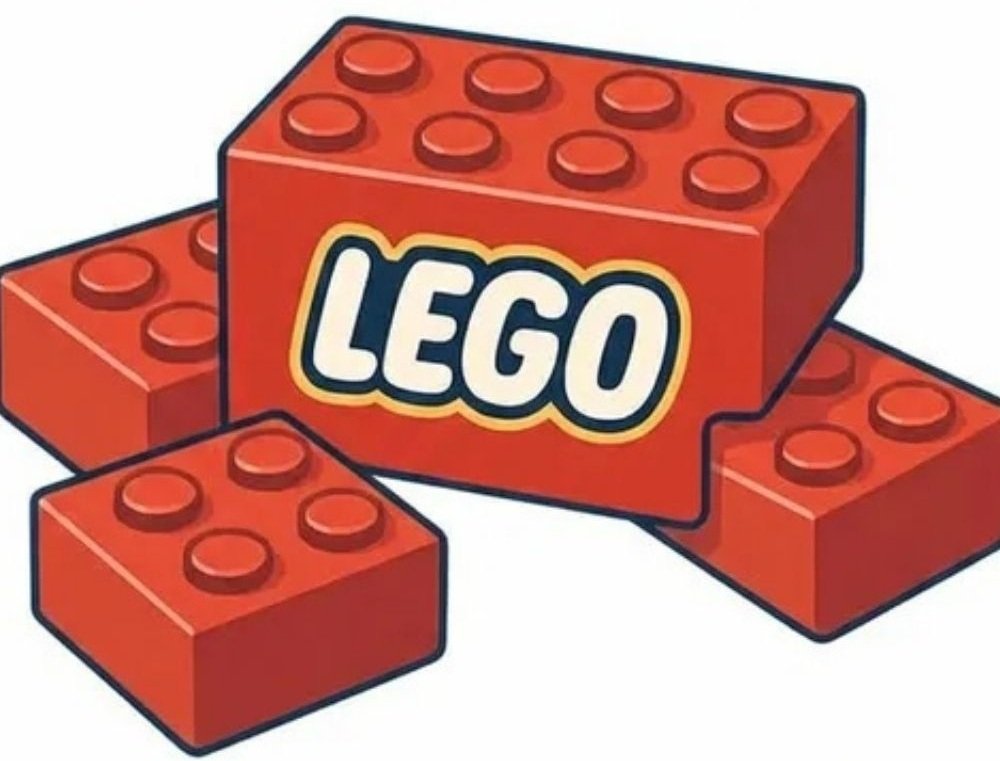
Have you ever paused to wonder where the name LEGO actually comes from? Those familiar, colorful bricks that invite creativity and hands-on play carry a name with a meaning far deeper than it first appears.
Behind the simplicity lies a story shaped by craftsmanship, resilience, and a clear philosophy about how children learn best—one that began quietly in a small town and eventually reached families all over the world.
The story starts in 1932, in Billund, Denmark, where a carpenter named Ole Kirk Kristiansen began making wooden toys. His approach was guided by a strong belief in quality, even during difficult economic times. He believed toys should be thoughtfully made and encourage children to develop through play.
A few years later, he chose the name “LEGO,” inspired by the Danish phrase leg godt, which translates to “play well.” It wasn’t a marketing slogan, but a guiding principle that reflected how seriously he took both craftsmanship and imagination.
A major turning point came in the late 1940s, when the company began experimenting with plastic—a bold and unconventional move at the time. This shift allowed for entirely new forms of play. Ole’s son, Godtfred, helped shape a vision centered on a unified building system, where pieces could connect, come apart, and be reused endlessly.
The early plastic bricks introduced a revolutionary idea: toys that encouraged children not just to follow instructions, but to invent, rebuild, and explore freely.
In 1958, the interlocking brick design was refined into the precise system still used today—strong enough to stay together, yet flexible enough to allow unlimited creativity. That innovation transformed play itself, promoting problem-solving, storytelling, and imagination across generations.
Over time, the LEGO name has come to represent far more than a toy brand. It stands for the belief that learning can be joyful, that simple ideas can grow into something extraordinary, and that playing well can shape how we think, create, and imagine the world.