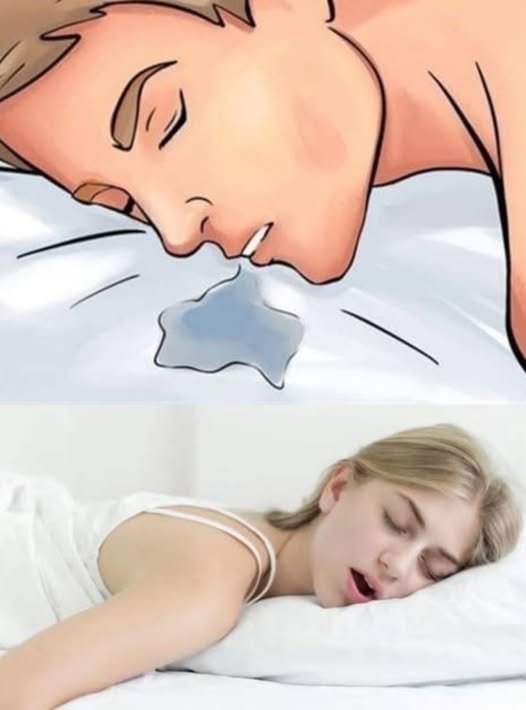
Occasional drooling during sleep is far more common than most people realize—and in most cases, it’s completely harmless.
It often happens when the body enters deep stages of sleep, facial muscles fully relax, or when someone sleeps on their side. Rather than being something to worry about, light drooling is often a sign that the body and brain have truly powered down to recover.
One of the most common reasons for nighttime drooling is nasal congestion. Allergies, colds, sinus pressure, or a deviated septum can make breathing through the nose more difficult. When this happens, the body naturally switches to mouth breathing during sleep. With relaxed jaw muscles and increased saliva production, drooling can occur. People who experience this may also notice snoring, dry mouth in the morning, or restless sleep.
Digestive factors can also contribute. Acid reflux during the night can trigger the body to produce extra saliva as a protective response to irritation in the throat. This may be accompanied by symptoms such as heartburn, a sour taste, coughing, or discomfort when lying flat. Adjusting meal timing, avoiding late-night eating, and elevating the head during sleep often helps reduce this type of drooling.
Oral health plays a role as well. Gum inflammation, dental irritation, or throat infections can temporarily increase saliva production. In these cases, drooling usually improves once the underlying issue is treated and the mouth returns to a healthy balance.
In general, drooling during sleep is not a cause for concern if it has always happened occasionally, appears during illness, or depends on sleep position. However, sudden changes, persistent excessive drooling, one-sided drooling, or difficulty swallowing should be discussed with a healthcare professional, as these symptoms may require further evaluation.
For most people, nighttime drooling is simply a normal part of deep, restorative sleep. Paying attention to patterns—rather than isolated moments—helps distinguish what’s