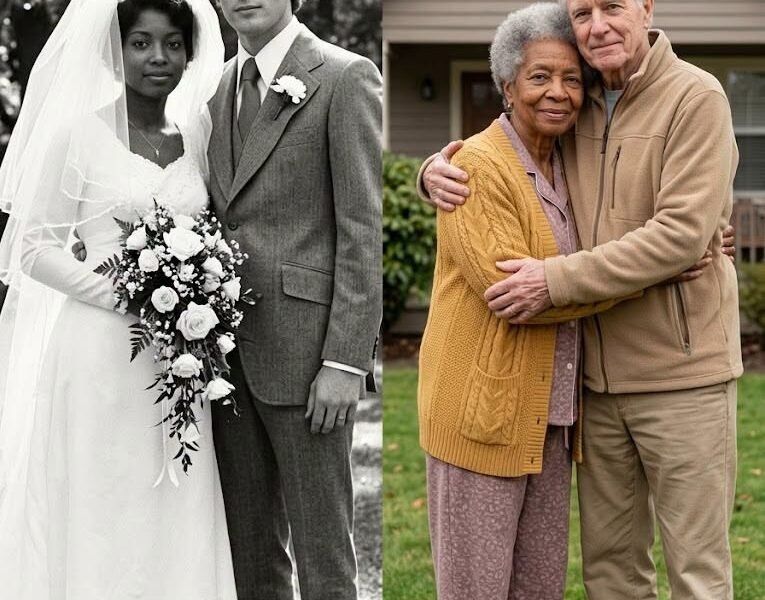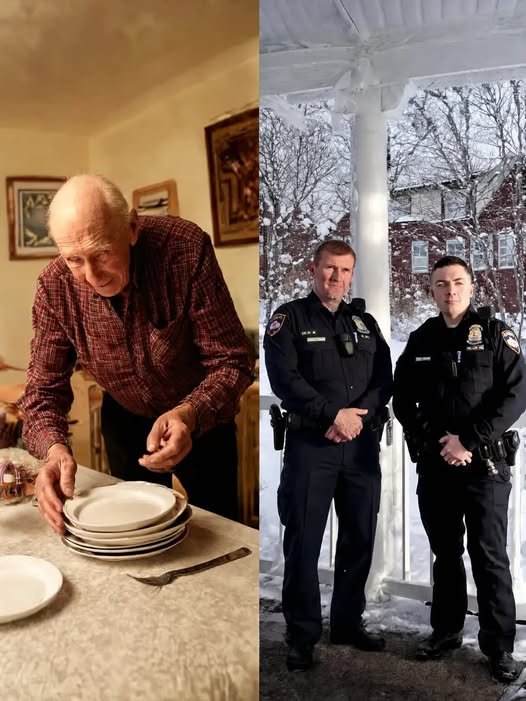
At seventy-eight, I spent my first holiday since my wife Margaret’s passing attempting to resurrect our family’s vibrant traditions. I poured over her weathered recipes, hand-rolling dough and roasting a feast intended for a house full of children and grandchildren who had all promised to “try” to make it.
One by one, the digital pings of my phone signaled the death of those expectations; my daughter Sarah was tethered to her law office, and my son Michael claimed the kids were too “wiped” to travel. I was left standing in a silent kitchen with enough food for a small army and eight empty chairs, prepared to clear a table that had never even been used.
The silence was shattered not by a late guest, but by an authoritative thud at the door that demanded immediate attention. I opened it to find two police officers who placed me under arrest for an aggravated assault dating back to 1992—a crime committed in Wisconsin, a state I had never even visited.
As they clicked the handcuffs behind my back and led me down the driveway, the true sting wasn’t the false accusation, but the crushing shame of my neighbors seeing into my dining room. The perfectly set holiday table, intended for a family that hadn’t shown up, was now a public testament to my abandonment.
At the station, the interrogation felt like a surreal fever dream until my community intervened. While my biological family remained absent during the crisis, my neighbor Linda, the local pastor, and the hardware store owner marched into the precinct to testify to my character, eventually forcing the sergeant to admit it was a case of mistaken identity.
However, the most traumatic moment occurred when my children finally arrived only to accuse me of staging the entire arrest as a “prank” to force their attendance. In that cold, clinical moment of clarity, I realized they didn’t see a father who had survived an ordeal; they saw a burden whose trauma was merely a “convenient” manipulation for attention.
“I don’t need to force anyone to eat with me. And if that’s what it takes to get you to come together, then I don’t want you there.”
I turned my back on my biological children and returned home with the people who actually valued the man I am in the present. Though the food required reheating, every one of the eight chairs was finally filled by the neighbors who had stood by me when the night turned upside down.
We didn’t share a bloodline, but we shared a genuine connection that no sense of “obligation” could ever replicate. As the house filled with laughter and the clinking of silverware, I realized that Margaret’s wish had been granted: the house was alive, fueled not by those who were supposed to be there, but by the chosen family who actually showed up.