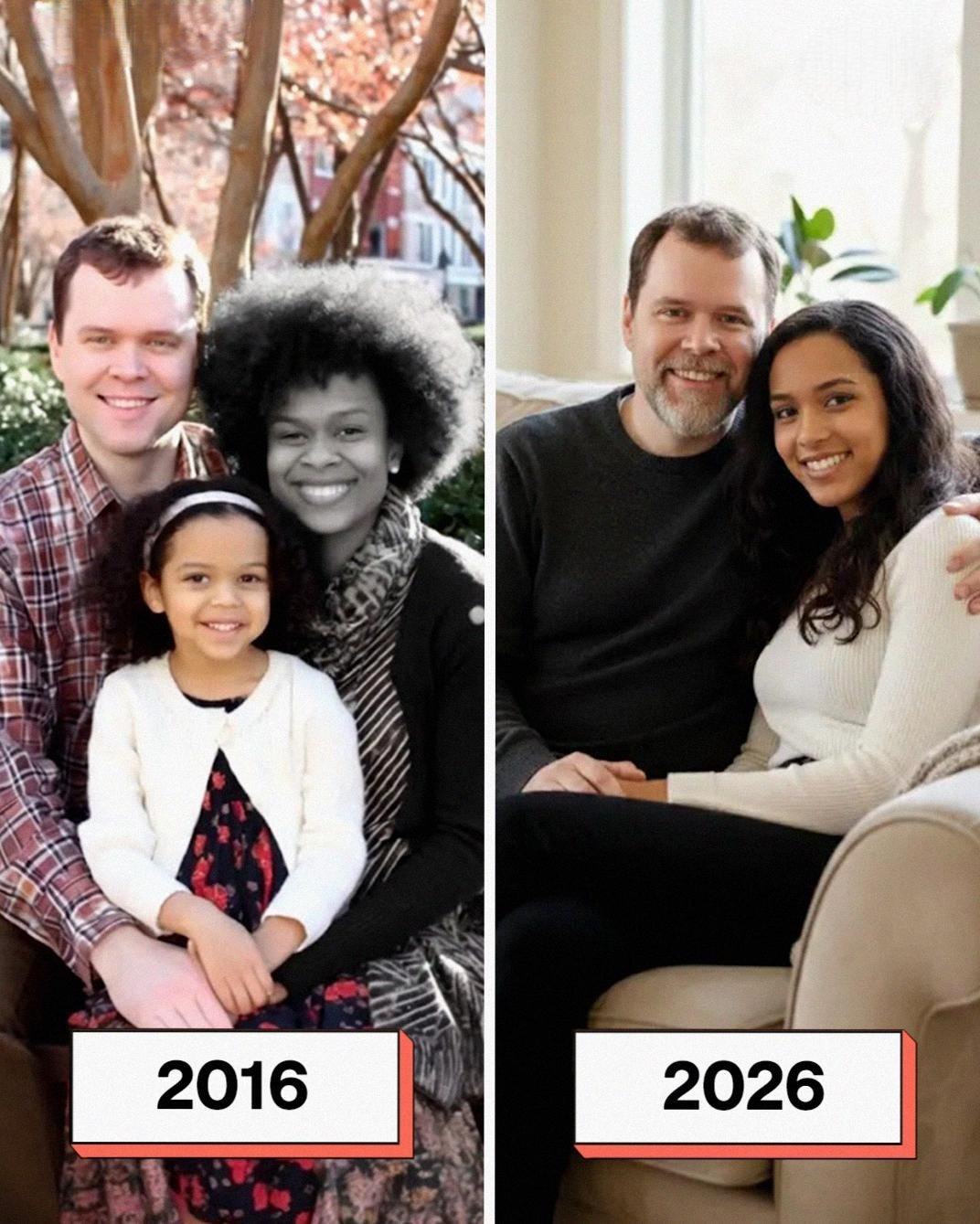
Ten years ago, I stood by a hospital bed and made a promise that would define the rest of my life. Her name was Laura, and she was the kind of woman who made the world feel brighter just by standing in it.
We had fallen for each other with a dizzying speed, but it wasn’t just Laura who captured my heart; it was her daughter, Grace. At the time, Grace was a shy little girl with a laugh that felt like a gift.
Her biological father had been a ghost from the moment he heard the word “pregnant,” vanishing into the ether without a phone call, a cent of support, or even the dignity of a goodbye. I had stepped into that vacuum, not out of obligation, but out of a love that felt as natural as breathing. I built her treehouses, navigated the complexities of braiding hair, and became the “forever dad” she deserved.
I am a simple man who makes a living in a shoe repair shop. My world is one of leather, adhesive, and the steady rhythm of a hammer. It isn’t a glamorous life, but it was a full one. I had intended to propose to Laura—I had the ring tucked away in a velvet box—but cancer is a thief that doesn’t care for plans.
Her final words, whispered through the haze of her final hours, were a plea: “Take care of my baby.” I took that command as my North Star. I adopted Grace, and for a decade, it was just the two of us against the world.
The disaster began on a Thanksgiving morning that should have been defined by the scent of roasting turkey and the warmth of a shared meal. I was in the kitchen, deep in the ritual of preparation, when I heard Grace enter the room. Expecting her usual holiday cheer, I asked her to help with the potatoes.
When she didn’t answer, the silence felt heavy and wrong. I turned to find her standing in the doorway, her frame trembling as if she were caught in a draft only she could feel. Her eyes were rimmed with a deep, bruised red from crying. She looked like a ghost inhabiting the body of my daughter.
She told me she wouldn’t be staying for dinner. The words were a physical blow. She explained that her biological father had found her on social media two weeks prior, and the revelation of his identity was a shock I wasn’t prepared for.
It was Chase, a local baseball star whose face was plastered on billboards across the city. He was a man celebrated for his athletic prowess but notorious in the community for an ego that could swallow a room whole. He was a hero on the field and a menace in private, a man of immense connections and zero conscience.
As Grace spoke, the horror of the situation deepened. Chase hadn’t reached out to her out of a sudden burst of paternal longing. He had reached out because he was a man in need of a PR miracle. His career was flagging, and his reputation was in tatters.
He needed a “redemption arc,” and he had decided that Grace was the perfect prop for his comeback story. He wanted to parade her in front of the cameras at a high-profile team dinner, presenting himself as the long-lost, self-sacrificing father who had finally reunited with his child.
But the most galling part was the leverage he used. He hadn’t just promised her a life of luxury, college tuition, and a new car; he had threatened her with my destruction. He told a teenage girl that with one phone call to his influential friends, he could have my shop condemned or my lease revoked.
He told her he would burn my life to the ground if she didn’t play her part in his charade. Grace, in her youthful innocence and fierce love for me, believed she had to sacrifice her own happiness to protect the only home she had ever known.
Seeing her so broken ignited a cold, focused fire within me. I knelt before her and took her shaking hands in mine. I told her that no shop, no business, and no amount of money was worth more than her peace of mind. I promised her that I was her father, and a father’s job is to protect his child from bullies, no matter how famous they might be. I asked her to trust me, and together, we formulated a plan to turn the predator into the prey.
A few hours later, the sound of a heavy fist pounded against our front door. When I opened it, there he was: Chase, looking every bit the caricature of a celebrity in a designer leather jacket and sunglasses despite the darkness of the evening. He moved to enter my home with an unearned arrogance, but I stood firm in the doorway.
He smirked at me, dismissively calling me “shoemaker” and “daddy,” as if those titles were insults. He demanded that Grace come with him immediately, citing the photographers and journalists waiting to capture his staged homecoming.
I didn’t argue. I didn’t plead. I simply asked Grace to bring me the black folder from my workshop. Chase laughed, assuming I was calling the police or some other authority he felt he was above. “I am the world,” he boasted, his voice dripping with the entitlement of a man who had never been told “no.”
When Grace returned with the folder, I opened it to reveal the digital trail he had left behind. Every threatening text, every coercive voicemail, and every message where he referred to Grace as a “tool” or a “prop” had been meticulously documented and printed.
The blood drained from his face as the reality of the situation set in. I informed him that these documents hadn’t just been gathered for my own records; they had already been sent to the team’s management, the league’s ethics committee, and three major news outlets.
The transformation in him was instantaneous. The polished celebrity vanished, replaced by a desperate, small man. He lunged at me in a fit of rage, but I shoved him back onto the lawn with a strength born of ten years of being a father. I told him to get off my property and never look back. He screamed that I had ruined him, but I corrected him: he had ruined himself the moment he tried to use a child as a bargaining chip.
In the weeks that followed, the fallout was absolute. The exposés were scathing, and Chase’s sponsors dropped him like a stone. His career didn’t just end; it evaporated. But inside our house, the atmosphere changed in a different way. The fear was gone, replaced by a quiet, settled peace.
One evening, as I was teaching Grace the intricate art of stitching a sole—a skill she took to with surprising grace—she asked me a question that made the last ten years feel like a single, beautiful breath. She asked if I would walk her down the aisle when she eventually got married.
It wasn’t a question about a future ceremony; it was an affirmation of our bond. It was her way of saying that biology is a footnote, but love is the entire story. I promised her there was nothing in the world that would make me prouder. As she leaned her head on my shoulder and called me her real father, I realized that the promise I made to Laura hadn’t just been about survival.
It had been about building something that no bully could ever tear down. We weren’t just a family because of a legal document or a dying wish; we were a family because we had fought for each other in the dark, and we had come out into the light together.