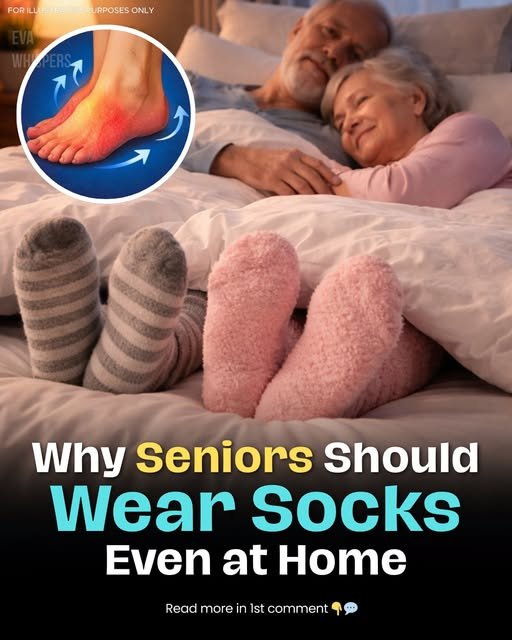
For many older adults, wearing socks at home may seem unnecessary. Some feel they are uncomfortable, while others simply overlook the habit.
But this small daily choice can make a big difference in comfort, safety, and overall health. As the body ages, circulation slows down, skin becomes more delicate, and keeping warm becomes harder. Covering the feet is one of the easiest ways to help the body cope with these natural changes. Often, it is the simplest routines that offer the greatest benefits.
“Wearing soft, comfortable socks at home helps older adults stay warm and supported throughout the day.”
Warm Feet Support Better Circulation
Cold feet are very common among seniors, especially during cooler weather or in the evenings. When blood flow decreases, the feet lose heat quickly, and this can cause blood vessels to tighten even more. This cycle may lead to stiffness, swelling, and general discomfort. It can be especially challenging for people living with arthritis, diabetes, or chronic joint pain.
Wearing socks made from breathable natural materials—such as cotton, bamboo, or wool—helps the feet stay gently warm without overheating. Warm feet encourage blood vessels to relax, which supports healthier circulation. Better blood flow doesn’t just help the feet; it can reduce aches and improve overall comfort throughout the day. A soft pair of socks can quietly support the body in ways many people don’t realize.
Socks Can Improve Sleep Quality
Many people are surprised to learn that warm feet can help the body prepare for sleep. When the feet are comfortably warm, blood vessels widen, sending signals to the brain that it is time to rest. This helps the body regulate temperature and promotes a sense of relaxation.
For older adults who struggle to fall asleep, wake up often, or experience nighttime leg cramps, wearing lightweight socks to bed may help. Soft, clean socks maintain warmth throughout the night and prevent sudden chills that can interrupt sleep. It is a gentle, medication-free way to support deeper, more restful sleep.
“Lightweight sleep socks help keep feet warm at night, supporting more restful and uninterrupted sleep.”
Protecting Delicate Skin and Preventing Injuries
As we age, the skin on the feet becomes thinner, drier, and more sensitive. Walking barefoot on cold or hard floors can lead to cracks, dryness, or small injuries that take longer to heal. Socks create a protective layer that reduces friction and shields the skin from dirt and bacteria.
This protection is especially important for people with diabetes, where even minor wounds can become serious if ignored. In addition, socks can play a major role in safety. Non-slip or grip socks help prevent slipping on smooth floors—one of the most common causes of falls among older adults. With proper socks, every step becomes more stable and secure.
“Non-slip grip socks add extra stability on smooth floors, helping reduce the risk of slips and falls.”
Choosing the Right Socks for Healthy Feet
Healthy feet start with clean, well-fitting socks. It is important to change socks daily and wash them regularly to remove sweat and bacteria. Socks with tight elastic bands should be avoided because they can restrict circulation. Many older adults find comfort in socks designed for sensitive feet, such as diabetic-friendly, seamless, or lightly supportive styles.
Seamless designs help prevent irritation, and proper sizing ensures comfort throughout the day. Socks should feel snug but not tight, and they should stay in place without slipping. Investing in a few high-quality pairs can greatly improve comfort and help prevent long-term foot issues.
A Simple Habit with Lasting Benefits

Wearing socks at home may seem like a small choice, but it supports circulation, protects fragile skin, promotes better sleep, and reduces the risk of falls. For older adults, comfort and safety often begin with the feet. Slipping on a cozy pair of socks is a simple act of self-care—and sometimes, caring for your health truly does start from the ground up.